Update, September 2026: Aisha Wahab was sworn in as the representative for California’s 14th District in September 2026. This letter is kept here as part of the record. See the CA-14 Special Report for where the questions stand.
CA-14 investigation: After the Primary | Chapter 9 of 10
New to this story? Start with Part 1: The Stolen Seat, or see the CA-14 Special Report hub.
← Previously: Dena Maldonado, If You Are Reading This: There Is Still a Path Forward
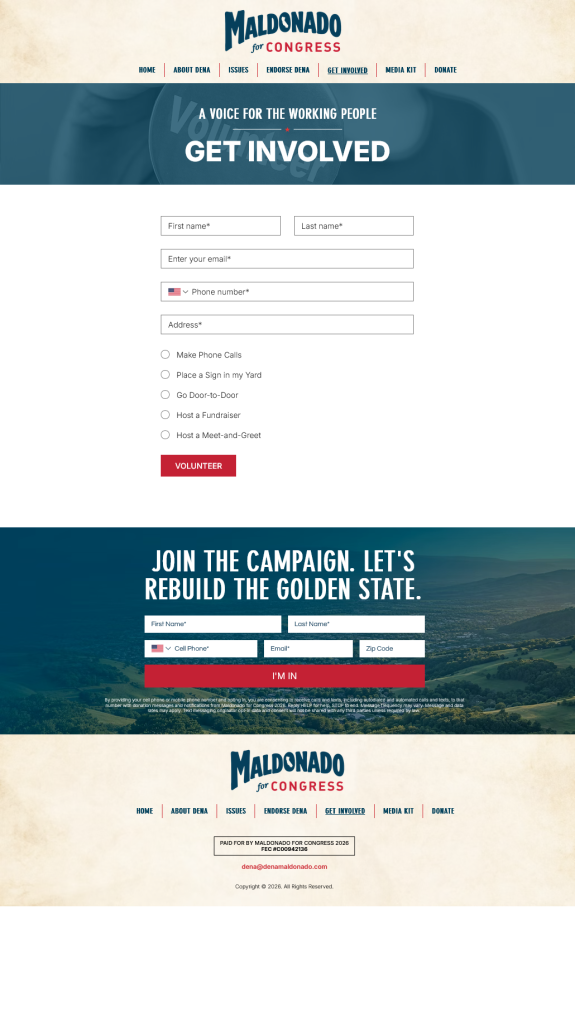
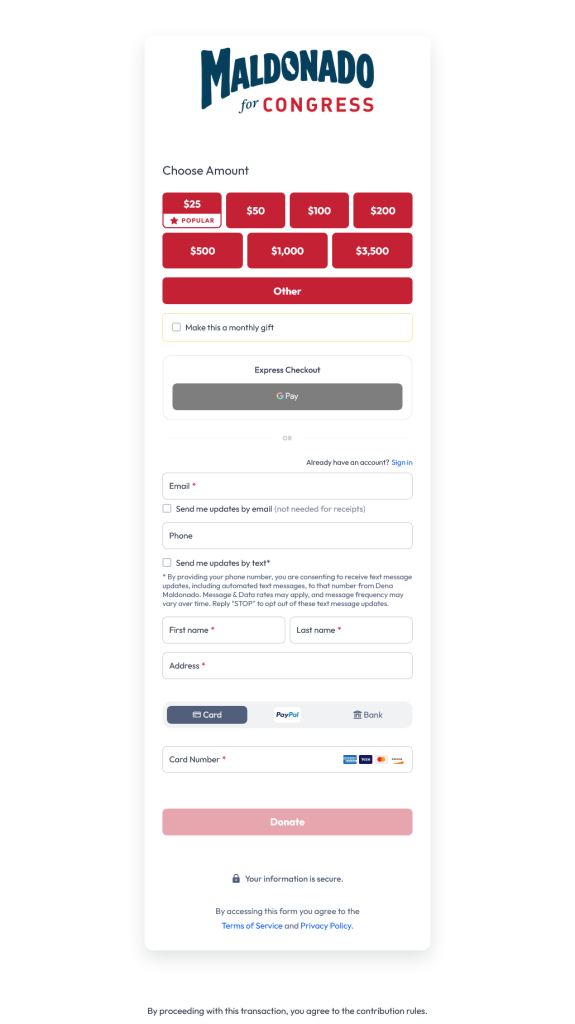
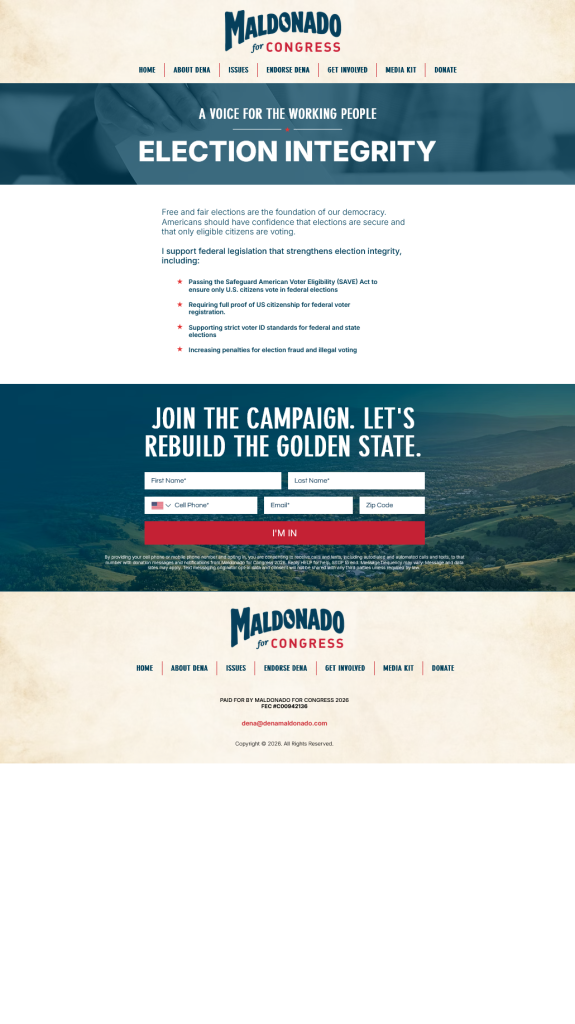
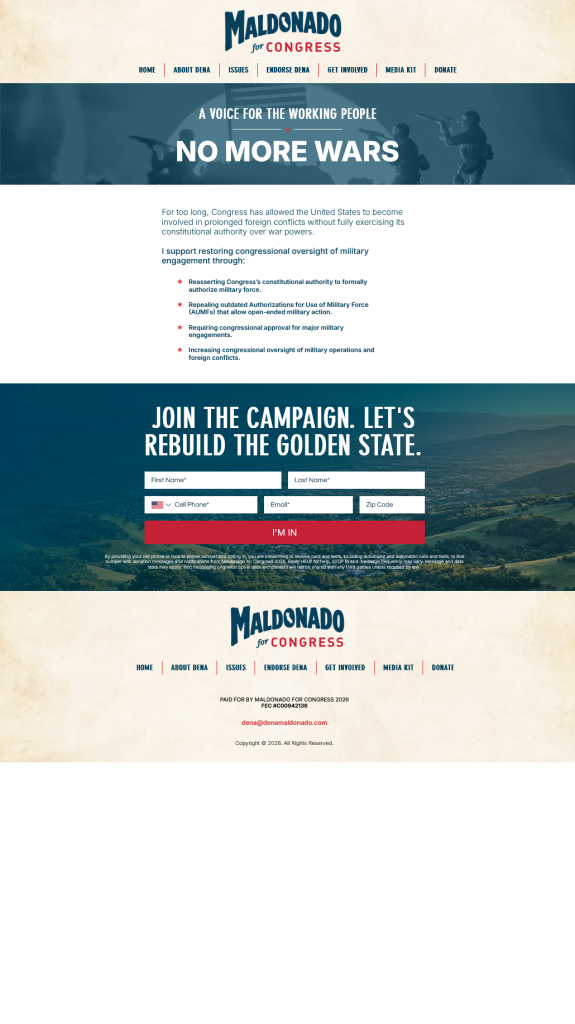
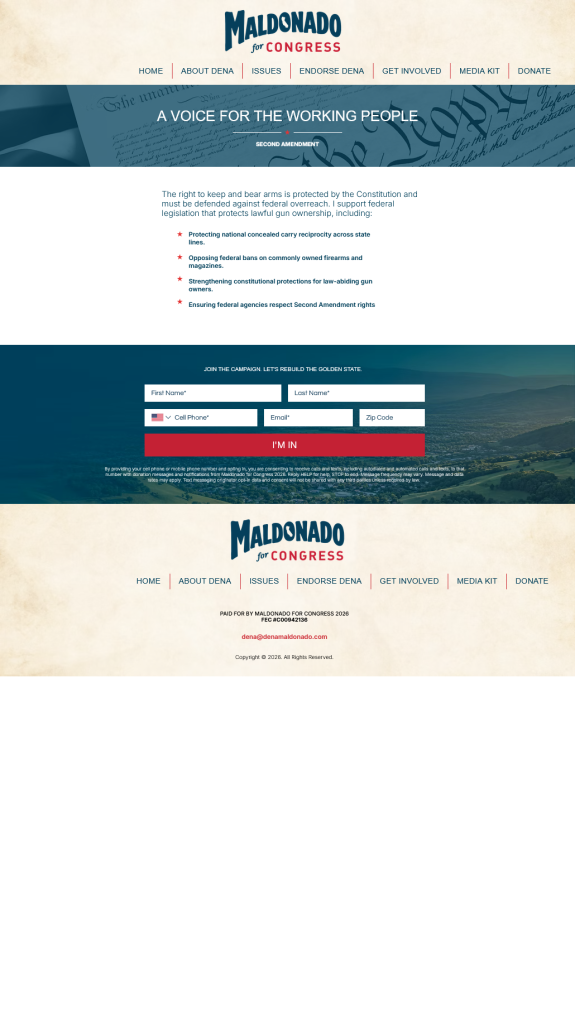
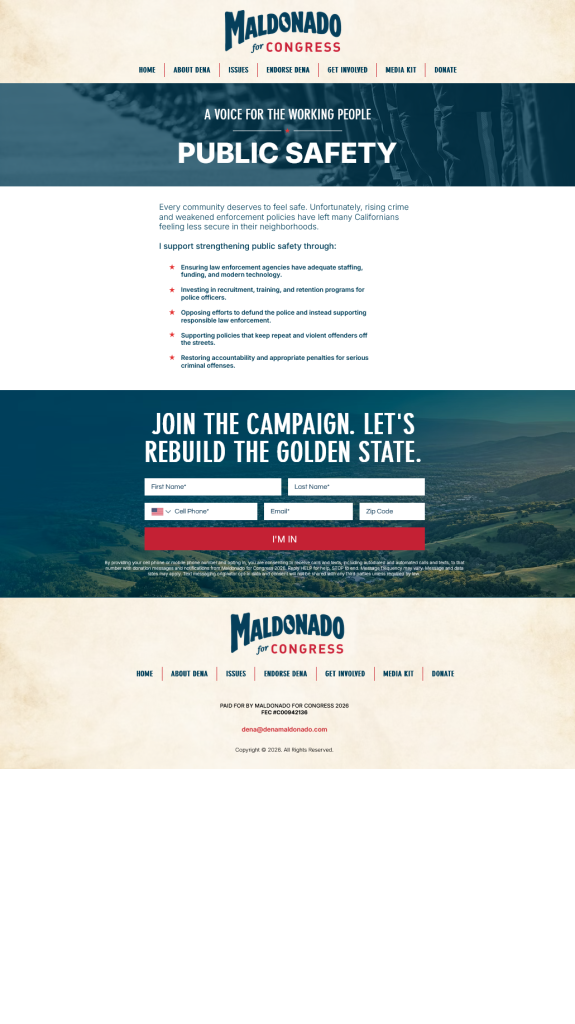
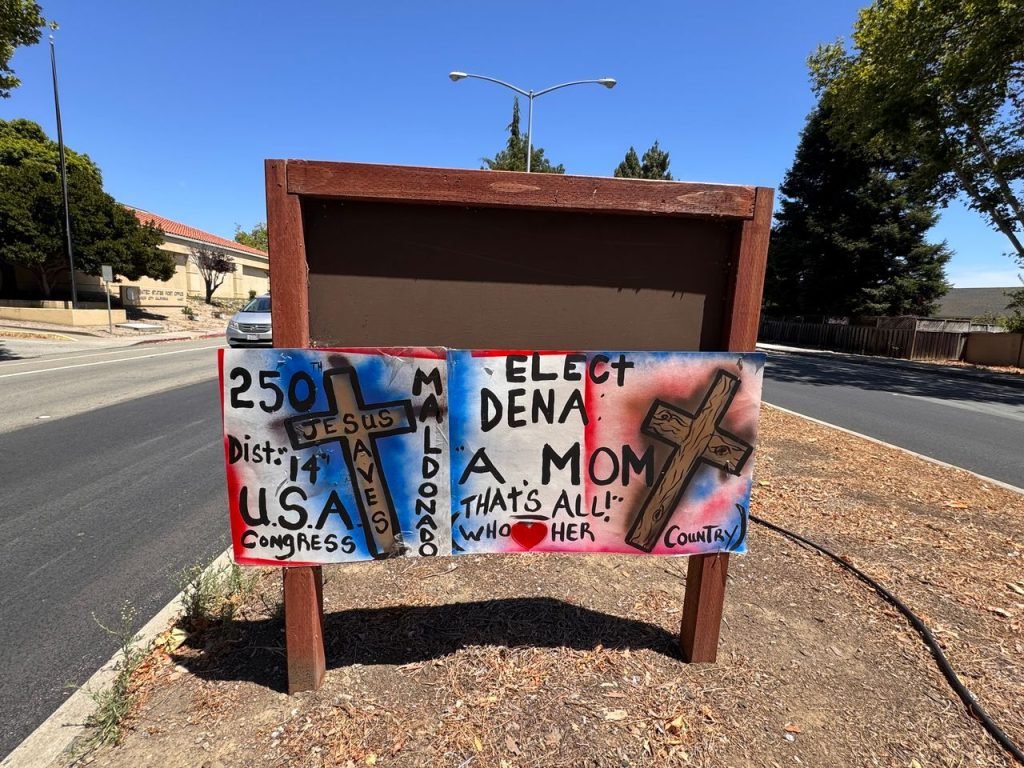
Addressed directly to Dena Maldonado, this post says public records confirm her Republican candidacy and the federal complaint involving her campaign.
To Speaker Mike Johnson, the House Committee on House Administration, and every Member of the United States House of Representatives:
Please do not rush past the questions surrounding California’s 14th Congressional District.
Investigate first. Seat later.
This is not a demand that Congress declare Aisha Wahab guilty of anything. It is not a demand that the House overturn an election based on rumor, partisan disagreement, or disappointment with its outcome.
It is something much more fundamental:
We are asking Congress to find out what happened.
On August 18, California voters chose Aisha Wahab to fill the remainder of the vacant CA-14 congressional seat. The certified results show Wahab receiving 53.09% of the vote against Melissa Hernandez’s 46.91%.
That result deserves respect.
But so does the integrity of the process that produced it.
A note on where this concern originates
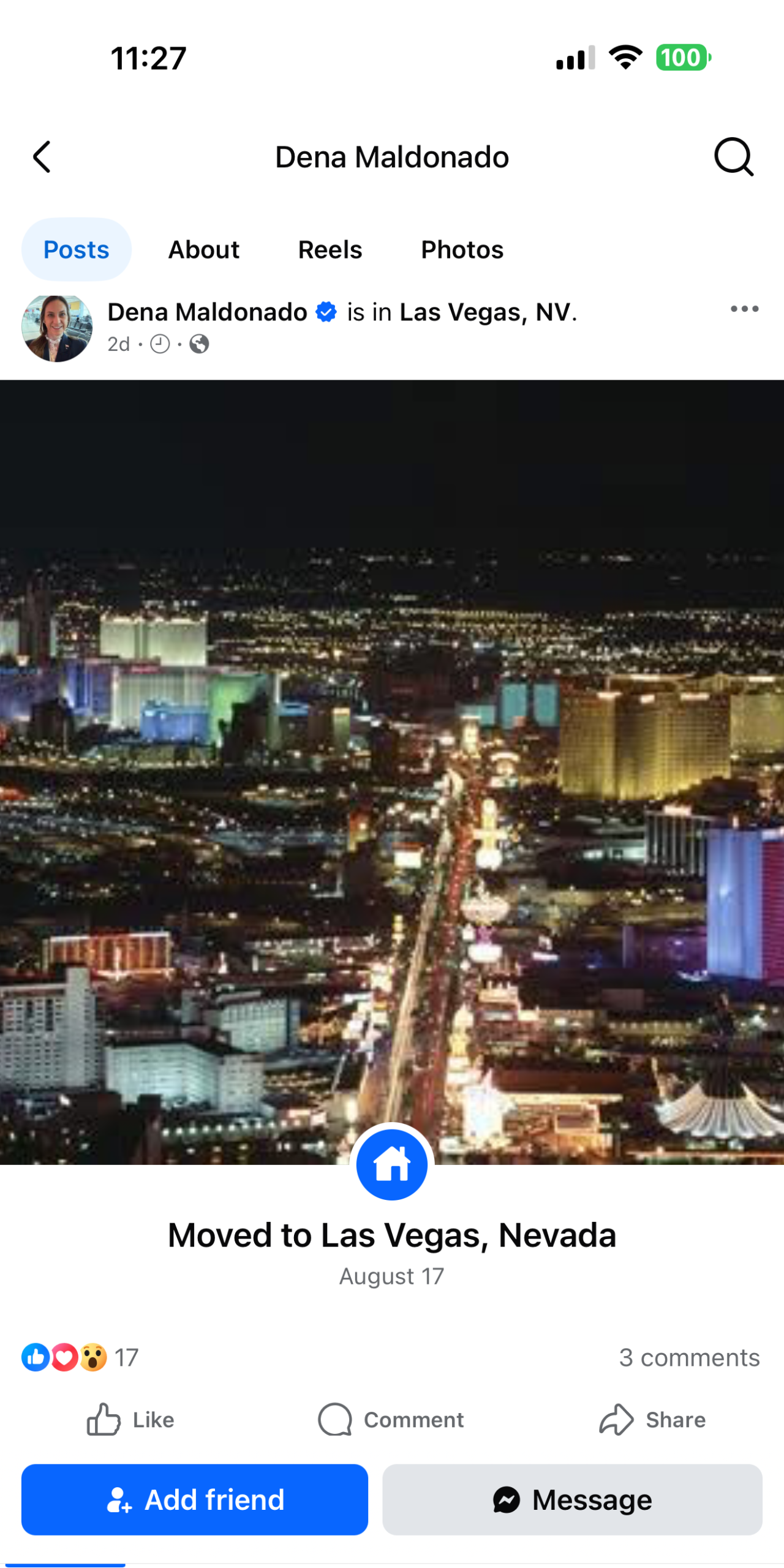
Before going further, it’s worth being direct about the source of the underlying complaint. The federal campaign-finance matter discussed below, FEC MUR 8508, was filed by Wendy Huang — a retired tech-executive, duly elected Alameda County GOP committeewoman, wife, mother, immigrant, entrepreneur, twice CA14 2026 top Republican vote-getter, and Republican candidate who also ran in the CA-14 primary and competed directly against Dena Maldonado, a recent transplant from San Diego, and self-described swimwear designer and florist.
That connection doesn’t answer the questions the complaint raises, but readers deserve to know it up front rather than discover it later. A complaint filed by an interested party can still identify real problems; it can also be wrong, or self-serving, or both. That’s exactly why the answer isn’t to accept or dismiss the allegations on the basis of who raised them — it’s to have them examined by an authority with no stake in the outcome.
California’s Congressional District 14 carries more than its share of national significance
Our CA-14 is not an ordinary suburban district. It is home to Lawrence Livermore National Laboratory, one of the two U.S. laboratories responsible for designing and maintaining the nation’s nuclear weapons stockpile, along with a satellite site of Sandia National Laboratories. In April 2026, Union City — also within the district — became home to the first U.S. facility dedicated to advanced AI chip packaging and assembly, a research and development center opened by the Japanese firm Resonac to support the chip supply chain behind AI servers and other next-generation hardware. The district also gained Forge 1, a nearly 289,000-square-foot advanced manufacturing campus opened by Velo3D in Livermore in July 2026 that produces mission-critical metal components for the defense, aerospace, and energy sectors.
None of that changes the legal standard for whether Congress should investigate. But there is a reason this seat’s representation deserves particular care: whoever holds it will sit on committees, receive briefings, and cast votes that touch directly on nuclear security and the AI and advanced manufacturing supply chain. That is an argument for getting the process right, not for favoring one outcome over another.
There is an unresolved question at the beginning of this election
The controversy does not begin on August 18.
It begins with the June special primary that determined which candidates would advance to the August runoff.
One of those candidates was Dena Maldonado, who was officially endorsed by the Alameda County GOP and California’s Republican Party.
On June 26, 2026, Wendy Huang filed a formal complaint with the Federal Election Commission alleging coordinated and unlawful campaign-finance conduct connected to Maldonado’s candidacy. The FEC acknowledged receipt of the complaint on July 2, 2026, and assigned it Matter Under Review (MUR) 8508. The named respondents include Dena Maldonado and her campaign committee, a labor-affiliated PAC called the Committee for Working Families, and the California and Alameda County Republican Parties.
It’s important to be precise about what that acknowledgment letter does and does not establish. It confirms that a complaint was filed and logged, and that respondents would be notified. It is not a finding that anything alleged in the complaint is true, and the FEC has not announced that it has opened a formal investigation, found reason to believe a violation occurred, or reached any conclusion. MUR 8508 is, at this stage, an open, unresolved matter — nothing more, and nothing less.
The complaint itself states facts combined with allegations of a specific pattern, which — again — is alleged, not proven:
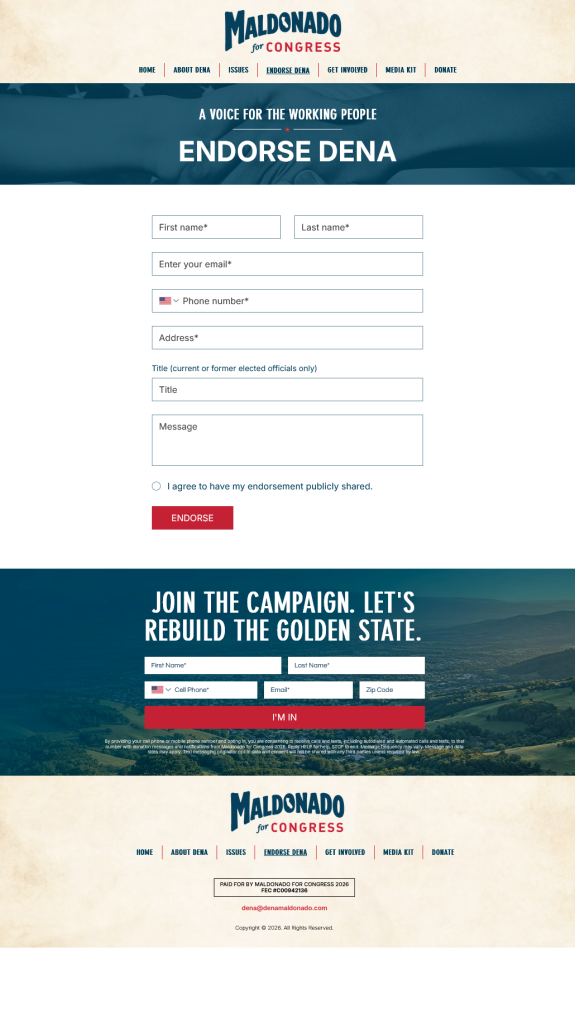
- That Maldonado’s campaign reported raising and spending $0.00 for the entire cycle while still securing ballot access and institutional endorsements;
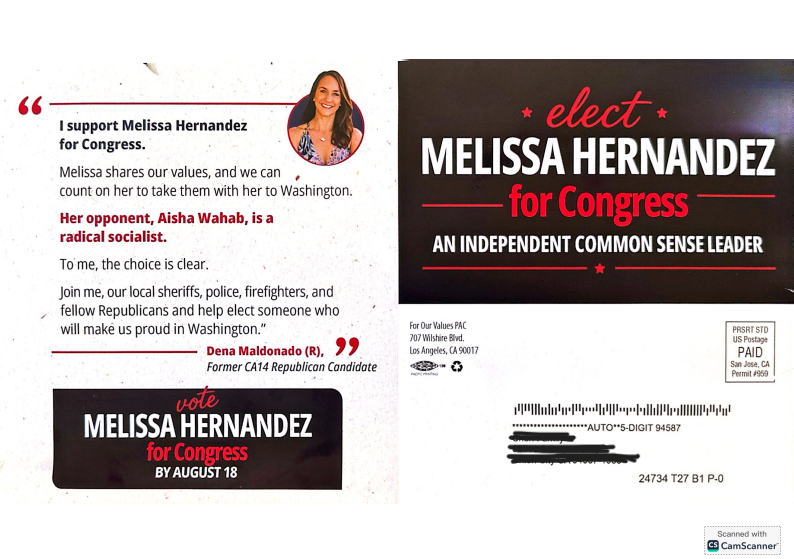
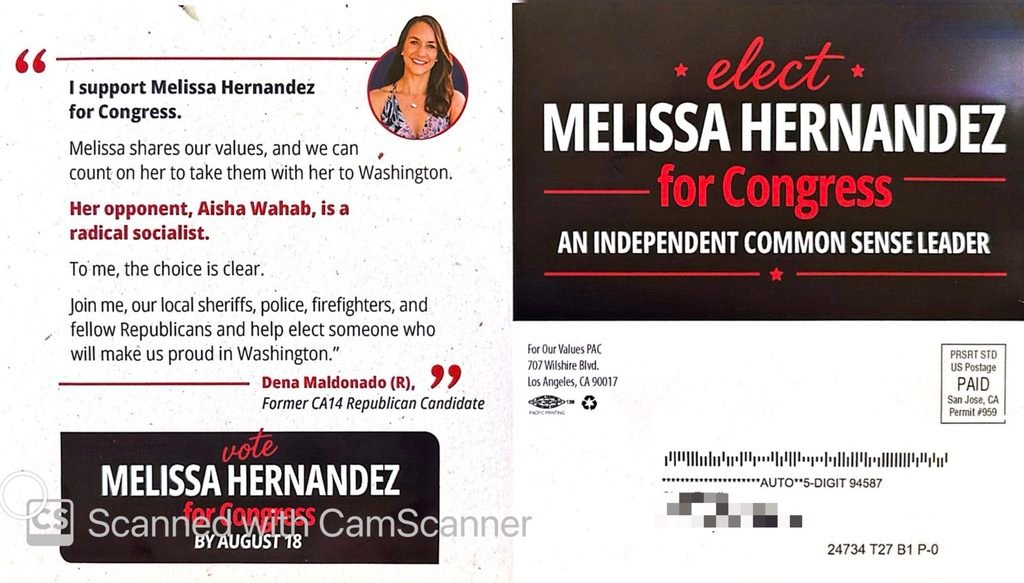
- That a $60,786 mailer campaign by a labor-affiliated PAC, run just before the special primary and nominally framed as an attack on Maldonado, instead amplified her conservative credentials to Republican and No Party Preference voters;
- That the PAC’s mailers used a headshot matching Maldonado’s own campaign materials, which the complaint argues points to shared assets rather than independent activity;
- That Dena Maldonado’s campaign relied on informal Form 99 filings rather than standard periodic financial disclosures, and that she later filed a sworn statement acknowledging amendments were needed without the public record being updated; and
- That the combination of these factors allowed Dena Maldonado to draw roughly 18,732 votes (about 12.1%) in the June 2 primary — a share the complaint argues would not have gone to her absent the alleged coordination.
None of this has been adjudicated. The allegations are disputed and should not be treated as proven facts unless and until the FEC or another appropriate authority establishes them.
But that is precisely why an investigation matters.
If the evidence ultimately shows that Dena Maldonado’s candidacy was an ordinary, legitimate candidacy, then the public deserves to know that.
If the evidence shows that inside and outside political actors improperly coordinated with or engineered a candidacy for the purpose of manipulating the outcome of the primary, the public deserves to know that, too.
And if the evidence shows that such conduct materially affected who appeared on the August 2026 ballot, Congress needs to understand the consequences before it acts on the resulting election.
Those questions cannot be answered by pretending they do not exist — and they cannot be answered by an acknowledgment letter alone. Only a completed FEC review, or a House inquiry that draws on the same underlying records, can do that.
This is bigger than one candidate
The issue is not whether you personally support Aisha Wahab.
It is not whether you support Wendy Huang.
It is not whether you are a Democrat or Republican.
It is not even ultimately about Dena Maldonado.
It is about whether Americans can trust that a congressional election is what it appears to be.
Imagine discovering after an election that a candidate had been placed into a primary not to win, not to represent a constituency, but allegedly to divert enough votes from another candidate to change who advanced.
If that happened, voters would have been participating in an election whose apparent choices did not reflect the actual political contest.
That would strike at something deeper than campaign strategy.
It would strike at the voter’s right to make an informed choice.
And if the allegations are false, the investigation is equally important — because innocent people deserve to have their names cleared by facts rather than left under a cloud of suspicion.
Congress has a responsibility here
The Constitution does not leave congressional elections entirely to political parties, campaigns, or even state election officials.
Article I, Section 5 provides that each House is the judge of the “Elections, Returns and Qualifications” of its members. The House has procedures for examining contested elections and has exercised its authority to investigate disputed congressional elections.
That constitutional responsibility exists for moments exactly like this:
When there is a serious question about whether the process that produced a congressional election was legitimate.
The House does not need to prejudge the answer.
It needs to ask the questions. It can obtain documents. It can examine campaign-finance records. It can review communications and expenditures. It can hear from the relevant campaigns and organizations. It can coordinate, where appropriate, with the FEC on the status of MUR 8508 rather than duplicate that work from scratch. It can determine whether the allegations have merit. And then it can make a decision based on evidence rather than speculation.
Please do not turn this into a partisan fight
There is an easy way for Washington to mishandle this.
Democrats can say: Wahab won. Move on.
Republicans can say: This is simply an effort to overturn an election.
Supporters of Huang can say: The election was stolen.
Supporters of Wahab can say: These allegations are an excuse to deny the will of the voters — filed, after all, by the losing candidate’s own former opponent.
Everyone can retreat into their political corners.
And the facts can get lost.
That would be a failure.
The right response is neither “Wahab must be seated immediately” nor “Wahab must never be seated.”
The right response is: show us what happened.
To Speaker Johnson: use the power of your office responsibly
Mr. Speaker, this is not a request that you personally decide who should represent CA-14.
It is a request that you ensure the House does not close its eyes to a potentially consequential election-integrity question simply because the election has produced a winner — and simply because the complaint that raised it came from an interested party rather than a neutral one. The identity of the complainant is a reason for scrutiny, not a reason for dismissal.
The House can investigate. The House can demand answers. The House can determine whether the allegations are supported by evidence. And, where the law and House procedures permit, the House can allow that process to occur before taking an irreversible step.
Please don’t ask the American people to trust the outcome before Congress — or the FEC, through MUR 8508 — has examined the questions that have been formally raised about the process.
To the House Committee on House Administration: investigate
We are asking for a serious, bipartisan examination of the CA-14 special election.
Not a political spectacle. Not a predetermined conclusion. An investigation.
Determine:
- What was the purpose and origin of Dena Maldonado’s candidacy?
- Who encouraged, recruited, financed, or supported that candidacy?
- What communications existed among the relevant individuals, campaigns, committees, and outside organizations, including the Committee for Working Families PAC named in MUR 8508?
- Were any campaign-finance laws violated, as alleged in MUR 8508?
- Was there coordination that was not properly disclosed?
- Was the candidacy intended to influence the outcome of the June primary?
- Did any alleged conduct materially affect the result?
- Would the August runoff have occurred in its present form absent that conduct?
- What does the evidence mean for the legitimacy of the election now before the House?
- What is the current status of MUR 8508 within the FEC, and has the Commission made any determination on reason-to-believe or dismissal?
Those are factual questions. Find the answers.
We are not asking Congress to overturn an election by accusation
We are asking Congress to protect the election by investigation.
There is a profound difference.
If the investigation establishes that everything was legitimate, then seat the winner and let the public move forward.
If the investigation establishes serious misconduct, then Congress must confront what that means under the Constitution and federal election law.
But neither outcome should be determined without first examining the evidence.
Because once the oath is administered, the political pressure to simply move on becomes enormous. The opportunity for a careful investigation becomes harder. And the public is left wondering whether Congress ever really wanted to know the truth.
Democracy requires more than counting votes
Counting votes matters.
But democracy is not merely the mechanical addition of ballots.
It requires that voters be presented with legitimate choices. It requires that campaigns compete under the law. It requires transparency about who is financing political activity. And it requires institutions willing to investigate when credible questions arise — even, and especially, when the questions were first raised by someone with a personal stake in the answer.
The people of CA-14 deserve that. Wendy Huang deserves that. Aisha Wahab deserves that. Dena Maldonado deserves that. And, most importantly, the voters deserve that.
If the allegations are wrong, let the evidence demonstrate that. If they are right, let the evidence demonstrate that.
But do not ask the American people to accept an answer before the questions have been investigated.
Before the oath, find the facts.
A congressional seat is not a trophy. It is not a prize for the campaign that wins the final count. It is a public trust. And when there is a serious unresolved question about whether the electoral process itself was manipulated, the responsible course is not to look away.
It is to investigate.
Speaker Johnson and Members of the House: please use the constitutional authority entrusted to you. Investigate MUR 8508 and the underlying allegations. Determine the facts. Determine whether the June primary — and therefore the August special election — was affected by unlawful or improper conduct. And until those questions can be responsibly answered, exercise caution before seating Aisha Wahab.
Not because she has been proven to have done anything wrong. Not because her opponent should automatically receive the seat. But because the integrity of an election is more important than the convenience of moving on.
The voters deserve the truth.
Before the oath, find the facts.
CA-14 voters: the election is over. The questions aren’t.
Right now, a federal complaint is sitting open — FEC MUR 8508 — alleging a “ghost candidate” was engineered to siphon Republican votes and rig who advanced past the June primary. Nobody has proven it. Nobody has disproven it either. And once Congress seats the winner, the pressure to just move on becomes overwhelming.
You don’t need to be a lawyer or an insider. You need five minutes.
We’ve already written the words. Send the email. Make the call.
Investigate first. Seat later. Do it now — before the window closes.
Email Template
How to use this: Copy the message below into an email. Fill in your name, city/county, and — if you know it — your congressional district. Send it to Speaker Johnson’s office (you can find a contact form at speaker.gov) and/or your own U.S. Representative, and to your county GOP chair if you’d like local party leadership to hear from you too. Sending it to more than one recipient is fine — just address or adjust the salutation for each.
Subject: Please support an investigation into the CA-14 election
Dear Speaker Johnson / [County GOP Chair],
I am writing as a voter who cares deeply about the integrity of our elections.
I am asking you to support a thorough, bipartisan investigation into the circumstances surrounding the CA-14 special election, including the allegations raised in FEC MUR 8508 concerning Dena Maldonado’s candidacy. That complaint was filed by Wendy Huang, CA14’s two-time Republican top vote getter, and two-time primary candidate — I’m noting that upfront because I think the questions it raises deserve to be evaluated on the evidence, not dismissed or accepted based on who filed it.
I am not asking you to prejudge the outcome or declare that anyone has done anything wrong. I am asking for the facts to be established.
There are serious questions about whether Maldonado’s candidacy may have been used to influence the June special primary and, consequently, which candidates advanced to the August election. The FEC has acknowledged the complaint and opened MUR 8508, but has not yet reached any determination. Those questions deserve a careful examination of the evidence.
The House of Representatives has a constitutional responsibility to judge the elections and returns of its members. I respectfully ask that you support:
- A thorough investigation of the allegations surrounding MUR 8508;
- Examination of relevant campaign-finance records, communications, and relationships;
- Determination of whether any unlawful coordination or other election violations occurred;
- An assessment of whether any such conduct materially affected the CA-14 election; and
- Appropriate caution regarding seating Aisha Wahab until these serious questions can be responsibly evaluated.
This is not about asking Congress to overturn an election based on an accusation. It is about making sure that Congress does not ignore a potentially consequential election-integrity issue.
If the allegations are unfounded, an investigation can establish that. If they are substantiated, the House needs to understand their implications.
Please stand for transparency, due process, and the integrity of the vote. Investigate first, and let the facts determine what happens next.
Thank you for taking this matter seriously.
Sincerely, [Your Name] [City/County, State] [Optional: Your Congressional District]
Phone/Voicemail Template
How to use this: This is written to be spoken, not read verbatim word-for-word — glance through it once, then call and talk naturally, hitting the same points. Call Speaker Johnson’s office at (202) 225-0600, your own U.S. Representative’s office (find the number at house.gov/representatives), or your county GOP office. If you reach voicemail, leave the message below; if a staffer picks up, you can use it as talking points instead. Keep it under a minute or so — staffers fielding call volume will appreciate brevity.
Hi, my name is [Your Name] and I’m a voter in [City/County]. I’m calling to ask [Speaker Johnson’s office / the County GOP] to support an investigation into the CA-14 special election — specifically the allegations in FEC MUR 8508 about Dena Maldonado’s candidacy in the June primary. That complaint was filed by Wendy Huang, CA14’s two-time Republican top vote getter, and one of Dena Maldonado’s primary opponents, and I think that’s worth knowing, but I still believe the underlying questions deserve a real look regardless of who raised them.
I’m not asking anyone to assume Aisha Wahab or Dena Maldonado did anything wrong. I’m asking for the facts to come out before the House takes any irreversible steps. Please look into this and let the evidence decide. Thank you.
[Your Name] [City/County, State]
Next: Where Things Stand: CA-14 After the Special Election →
Disclosure: Republican Forum has endorsed Wendy Huang in the CA-14 race. Republican Forum is independent of all campaigns, with no coordination with, funding from, or direction from any campaign.