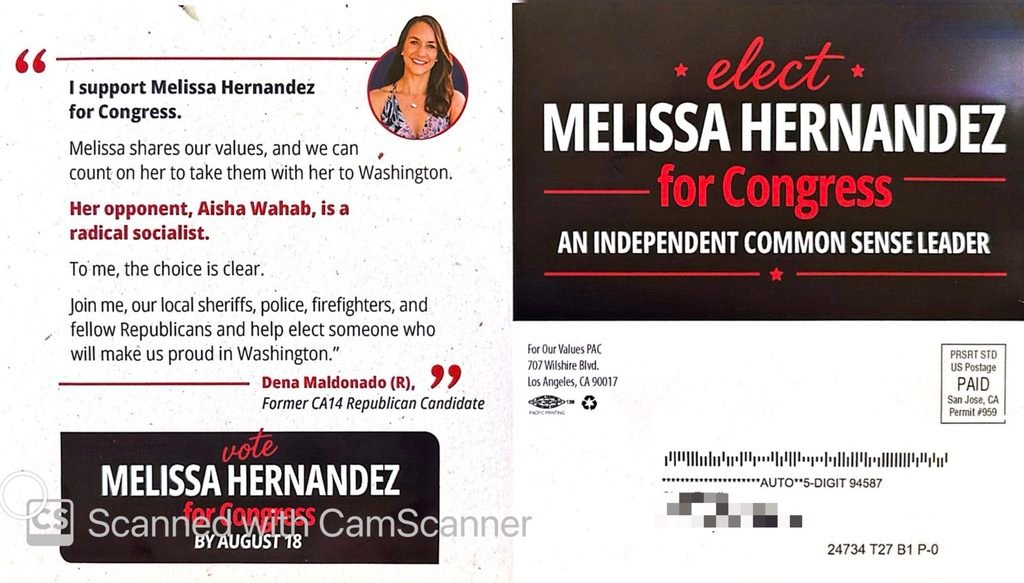
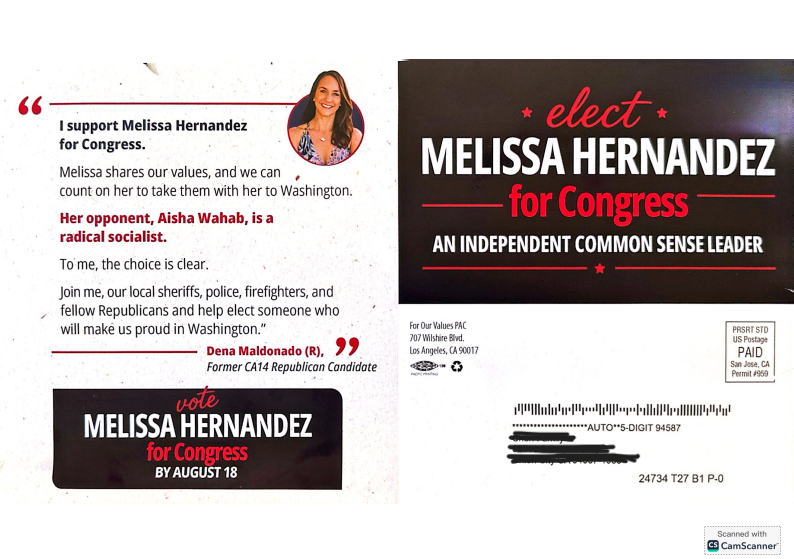
Editorial opinion. This piece reflects the analysis and opinion of Republican Forum rather than straight news reporting.
CA-14 investigation: The Alameda Dispute | Chapter 3 of 6
New to this story? Start with Part 1: The Stolen Seat, or see the CA-14 Special Report hub.
← Previously: The Controlled Opposition: Alameda County GOP Leadership and 116,000 Registered Republicans
The post argues the Alameda County Republican Party has turned its back on 116,000 registered Republicans, noting 951 Facebook followers as of May 2026.
Are California’s County Republican Parties Engineered to Lose?
A Pattern of Failure So Consistent Across San Diego and Alameda Counties That Incompetence Alone Can No Longer Explain It
Introduction: When Failure Becomes a Feature
Every political party loses elections. Losing is part of the game. But there is a meaningful difference between a party that fights and falls short and a party that refuses to field an army in the first place — and then blames the weather for the defeat.
What has been documented across multiple California county Republican organizations — most extensively in San Diego County and, more recently, in Alameda County — is not a losing streak. It is something more unsettling: a pattern of sustained, systematic, and consistent organizational failure that produces the same result, cycle after cycle. Democratic victories. Republican invisibility. Grassroots frustration. Leadership silence.
The central question this article demands you take seriously is not whether the California Republican Party is struggling. Everyone knows it is. The question is: why do the failures always cut in the same direction?
Not sometimes. Not occasionally. Always.
No candidate infrastructure. No public-facing maps. No Spanish-language outreach. No Vietnamese-American engagement. No grassroots clubs. No candidate recruitment timeline. No published platform. No 2026 news updates — even as filing deadlines passed. And, in Alameda County, six voter-elected Central Committee members physically barred from taking their seats by party insiders.
At what point does a pattern of failure become a choice?
This is the question reasonable Republicans — and honest political observers of any party — must now be willing to ask aloud.
The Who: A Leadership Class That Cannot Be Held Accountable
Understanding this story requires understanding the institutional structure of California Republican politics.
At the top sits the California Republican Party (CAGOP), headquartered — improbably — in a shared Sacramento office building at 1001 K Street, where the 4th floor houses the state GOP and the 2nd floor houses the California Labor Federation, the union machine that funds the Democratic supermajority, killed independent contracting with AB 5, and bankrolls campaigns against Republican values. As one post from the source material observed dryly, “they share the same security guards, the same air conditioning, and the same address.” Meanwhile, the California Democratic Party operates out of its own standalone headquarters on 9th Street — independent, purpose-built, and unambiguously focused on winning.
Proximity, as the saying goes, breeds complacency.
Beneath the state party sit the county central committees, which are theoretically the ground-level engines of Republican politics — responsible for candidate recruitment, endorsements, voter outreach, and grassroots mobilization. In San Diego County, that body is the Republican Party of San Diego County (RPSDC), led in early 2026 by Chairwoman Paula Whitsell, along with an Executive Committee that controls endorsements, the Victory Fund, staffing, communications, and candidate support — or rather, the consistent absence of it.
In Alameda County, the Alameda County Republican Party (ACRP) governs over 116,000 registered Republicans. It has 951 Facebook followers. In May 2026, it has no publicly accessible bylaws on its website, no pictures of its committee members, and an “Election Integrity Officer” who conducts official business through an encrypted ProtonMail account rather than a party domain email.
These are not peripheral, poorly-funded county offices on the edge of civilization. San Diego County is the fifth-largest county in the United States by population. Alameda County encompasses Oakland, Berkeley, and Fremont. These are consequential jurisdictions — and the Republicans who nominally lead them appear to have concluded that losing is acceptable, so long as the organization continues to exist.
The What: A Comprehensive Inventory of Absence
Words like “failure” and “dysfunction” risk becoming abstractions. The specifics matter. What follows is not opinion — it is a documented inventory of things that do not exist.
In San Diego County, as of December 18, 2025:
“The San Diego County Democratic Party maintains a dedicated, easy to follow, and organized page listing every candidate they know is running for the 2026 primary. Meanwhile, our San Diego County GOP website offers no equivalent. There is no centralized hub. No map. No list.”
That quote deserves to sit alone for a moment. No map. No list. The 2026 election cycle was already underway, filing windows were opening, and the official party headquarters of a major American county offered prospective candidates and voters nothing but, as the source material noted, “some comical, amateurish, and unflattering pictures of President Trump.”
The Map Is Missing. Redistricting had already redrawn congressional and legislative lines. In an election year, voters needed to know which district they lived in, which candidates were running, and who was organizing in their neighborhood. The San Diego GOP’s response: silence. Not even updated maps. “Go to sandiegorepublicans.org right now. Search for the 2026 Congressional district boundaries. You won’t find them.”
The News Stopped in 2024. By February 3, 2026 — with mail-in ballots weeks away from being sent — the San Diego GOP’s official “Latest News” page had not published a single item dated 2026. Not one. The most recent entry was from November 2025. Filing deadlines were passing. Nomination windows were opening and closing. And the party was silent. As the source material documented in a formal notice: “By publishing no 2026 updates, the San Diego GOP has failed to warn prospective candidates of filing deadlines, failed to alert members to nomination periods, failed to provide compliance guidance, failed to acknowledge an active election year.”
No Clubs. No Chapters. No Community. The San Diego County Democratic Party maintains an extensive network of active, named, publicly listed clubs — fifty of them, organized by geography, ethnicity, age, profession, and issue area. Each has named leaders, meeting times, locations, Zoom links, and bylaws. The Republican Party of San Diego County’s equivalent? Donor tiers. “Pay to belong. Pay to be seen. If you can’t write a check, you don’t exist.” Zero geographic clubs. Zero affinity groups. Zero student organizations. Zero.
The Event Disparity: 175 to 5. Between January and June 2026, the San Diego Democratic Party scheduled over 175 separate events — candidate trainings, voter registration drives, neighborhood organizing sessions, outreach to AAPI communities, labor unions, and young voters. The San Diego GOP scheduled exactly five events in that same period. After a single night of organizing meetings on January 12th, the party’s calendar went effectively dark for five months, resurfacing only for a high-dollar Lincoln-Reagan Dinner in June.
“This isn’t just a gap,” the source material concluded. “It’s a surrender.”
The Candidate Pipeline: Six Months Behind. The San Diego Democratic Party held its 2026 candidate recruitment, development, and training meeting on September 2, 2025. The Republican equivalent — a single four-hour session at a Courtyard by Marriott — was scheduled for February 21, 2026. Nearly six months later. “Six months of lost fundraising and donor cultivation. Six months of lost voter contact, door-knocking, phone calls, and community presence. Six months of letting the opposition define the race uncontested.”
No Platform. No Principles. No Public Contract. The San Diego County Democratic Party publishes clear, downloadable PDFs of its county, state, and national platforms. Voters know what Democrats stand for. The Republican Party of San Diego County publishes no county platform, no California GOP platform, and no national Republican platform. What is published? Bylaws. Internal rules. Power mechanics. “A party that publishes rules but not principles has stopped representing its voters.”
No Spanish-Language Outreach. In one of the most heavily Latino counties in the United States: “No Spanish-language version of the party website. No consistent Spanish-language social media content. No bilingual voter education strategy. No sustained engagement with Spanish-language media. No visible outreach to Latino business or civic organizations.” The source material called this not underdevelopment. “This is nonexistence.”
No Vietnamese-American Engagement. A community defined by anti-communism, small business ownership, law-and-order values, and high voter participation — “For decades, they aligned with Republicans because Republicans spoke clearly about family values, freedom, national sovereignty, anti-communism, entrepreneurship, and public safety.” The San Diego GOP’s response: “Zero serious Vietnamese-language outreach efforts. No sustained presence in Vietnamese communities. No recruitment of Vietnamese leaders into party infrastructure. No explanation for any of it.”
Candidates Denied Voter Data — In Silence. In early 2026, legitimate Republican voters — including a currently elected Republican official — went to the San Diego County Registrar of Voters and the San Diego City Clerk seeking voter data files they were legally entitled to, in order to collect signatures for ballot access. They were denied. The San Diego GOP’s response? “Silence. No press release condemning this obstruction. No legal challenge being filed. No urgent call to action for the Central Committee to rally support.”
This is not a party struggling to win. This is a party that has ceased to compete.
The When: A Critical Window Being Squandered in Real Time
The timing of these failures is not incidental — it is the point.
The 2026 election cycle is not a future abstraction. It is happening now. Signature collection for state and federal offices was required between December 19, 2025, and February 4, 2026. Nomination papers for state and federal candidates had to be completed during a February 9 through March 6, 2026 filing window. City Council nominations opened February 4 and closed in early March. Mail ballots in California begin arriving in voters’ hands weeks before Election Day.
Every one of these deadlines passed during a period when the San Diego GOP’s official website had published zero news in 2026, its candidate list was empty, its events calendar was barren, and its leadership was silent.
The source material puts this in terms no political professional can misread: “California elections are not decided on Election Day. They are decided weeks earlier, when mail-in ballots arrive.” By the time a Republican candidate realizes they needed party infrastructure six months ago, it is already too late. The party knows this. It has always known this.
And it did nothing.
As of December 18th, 2025, the moment that inaction was first documented and published, the 2026 primary was already in its organizational infancy — exactly the period when candidate recruitment, donor cultivation, volunteer training, and infrastructure-building are most critical and most irreversible. The window does not reopen.
The Why: Incompetence, or Something More Deliberate?
This is the question the evidence forces you to confront.
Let us grant, for the sake of argument, that any single one of these failures could be explained by incompetence. Websites break. Staff turnover is real. Small organizations get overwhelmed. A missing map here, a late filing there — isolated mistakes are part of institutional life.
But what is documented here is not a mistake. It is a system.
Consider what would have to be simultaneously true for this to be mere incompetence:
The county party would have to have forgotten to publish a candidate list — for years running. It would have to have accidentally built bylaws that concentrate power in leadership while eliminating accountability to the membership. It would have to have unintentionally scheduled 35 times fewer organizing events than the opposing party. It would have to have inadvertently created a donor-tier “club” structure that erases every form of community organizing. It would have to have coincidentally failed to produce Spanish-language or Vietnamese-language materials despite operating in a county with hundreds of thousands of speakers of each. It would have to have accidentally gone dark on news updates at the exact moment that filing windows opened. And it would have to have reflexively remained silent every single time Republican candidates needed institutional defense.
“When problems appear once, they can be dismissed as mistakes,” the source material observes. “When they appear repeatedly, across systems, cycles, and leadership decisions, they become patterns.”
Patterns are not accidents. Patterns are structures. And every structural choice documented here produces the same outcome: Democrats win. Republicans lose. Leadership stays in place.
The source material poses the clarifying question that cuts through every rationalization: Who benefits?
Not Republican candidates. Not Republican voters. Not Republican donors. Not Vietnamese Americans, Latino families, or Independent voters who might have been persuaded by a competent Republican operation.
Democrats benefit. Every time. From every failure. Without exception.
There is a point at which the charitable interpretation — that this is all just incompetence — requires the observer to perform more intellectual labor than the evidence supports. That point has been passed.
The How: The Mechanisms of Democratic Advantage
Let us be precise about causality. These are not vague harms. Each failure has a specific, traceable mechanism by which it advantages Democrats.
Information gaps suppress candidate entry. When there is no public candidate hub, no map of open seats, no filing-deadline guidance, and no call to action for vacant races, fewer Republicans run. Fewer candidates means fewer contested races. Fewer contested races means Democrats face reduced scrutiny and win more seats by default or near-default. The source material identified a particularly alarming example: the 2024 52nd Congressional race between Democrat Juan Vargas and Republican Jason Lee, in which 87,501 Republicans voted for a candidate with no debates, no interviews, no campaign website, no known fundraising or expenditures, and no publicly available photographs. A placeholder candidate — or worse.
Bylaw structures eliminate accountability and discourage participation. The San Diego GOP’s governing documents, by explicit design, allow the party to: meet in closed session for any purpose with a simple majority vote, keep all discussion from those sessions confidential, centralize endorsement authority in a small executive circle, spend from the Victory Fund without candidate notification or justification, and discipline members for vague offenses like causing “embarrassment.” Working-class Republicans, disabled members, veterans with mobility challenges, young professionals, and parents — all are effectively excluded by an in-person-only attendance requirement that San Francisco Republicans and virtually every other modern political organization in America has long since abandoned. A party that cannot be held accountable has no incentive to perform.
The absence of clubs eliminates volunteer infrastructure. Grassroots clubs are the capillary system of political organizing. They recruit volunteers, identify donors, register voters, conduct community outreach, and provide social fabric that makes political participation sustainable. Without them — and the San Diego GOP has zero, by choice — each election cycle must rebuild from scratch. No institutional memory. No standing relationships. No sustained momentum. Democrats, with fifty active clubs in San Diego County alone, never face this problem.
Delayed and withheld endorsements starve candidates of oxygen. Early endorsements unlock donor confidence, volunteer energy, media attention, and debate invitations. The San Diego GOP’s practice of withholding endorsements — sometimes indefinitely, sometimes until months after they could have mattered — denies Republican candidates the one thing that separates a campaign from a candidacy: the institutional signal that they are real, viable, and worth backing. “If you wanted to weaken your own candidates without breaking any rules, this is exactly how you’d do it.”
Strategic silence on wedge issues protects Democratic candidates. City Council and other local races are officially nonpartisan — no party labels appear on the ballot. But voters are not nonpartisan. Donors are not nonpartisan. Endorsing organizations are not nonpartisan. In this environment, clear contrasts on culturally salient issues are among the few tools Republicans have to break through Democratic structural advantages. The San Diego GOP systematically advises candidates against raising them. The result: Democratic candidates are never forced to define basic terms, take positions on controversial questions, or defend ideological commitments that alienate mainstream voters. “They are not offering strategy. They are protecting Democrats from accountability.”
Escalation: From Pattern to System — San Diego to Alameda
If this were a San Diego story alone, it would be disturbing but containable — the dysfunction of one county organization, however large.
But it is not one county.
In Alameda County — a Bay Area jurisdiction with 116,000 registered Republicans — the Alameda County Republican Party (ACRP) presents a mirror image of the same collapse, with its own uniquely alarming features.
The ACRP’s Facebook page, the primary way it communicates with a base of 116,000 registered voters, has 951 followers. That is not a typo. 951 followers for 116,000 registered Republicans — a reach rate of less than one percent.
The ACRP website does not publish its bylaws. It does not publish photographs or identifying information about its committee members. Governance documents that should function as a public contract with Republican voters are treated, as the source material observes, “like state secrets, likely so they can be reinterpreted or ignored at a moment’s notice.”
The ACRP’s designated Election Integrity Officer, Mark Zulim, lists a private, encrypted email account rather than through an official party domain address. “Why is an officer tasked with ‘integrity’ avoiding the official party server? Is it to avoid a paper trail? To dodge accountability?”
And perhaps most damning: when six Republicans ran for seats on the Alameda County Republican Central Committee in the March 2024 Presidential Primary, they won. They were democratically elected by their neighbors and fellow Republicans. And then, on December 30, 2024 — the same day they received removal letters — party leadership inserted a bylaw change that stripped them of their seats.
Six voter-elected members. Purged. By the people who were supposed to represent the Republican voters of Alameda County.
The lead plaintiff, Wendy Huang — immigrant, retired tech executive, mother, and lifelong Union City resident — filed suit. The case, Huang v. Solnordal et al., is a matter of public record in Alameda County Superior Court. The facts are not in dispute.
When you set San Diego and Alameda side by side, the pattern transcends local leadership eccentricities. You have two geographically distant, operationally distinct county Republican organizations — one in Southern California, one in the Bay Area — exhibiting structurally identical behaviors: opacity, entrenchment, hostility to new participants, and outcomes that benefit Democrats.
This is no longer a county story. This is a California story.
Accountability: The California Republican Party Cannot Be a Bystander
The California Republican Party (CAGOP) exists, in theory, to provide exactly the oversight that would prevent what has been documented in San Diego and Alameda counties. It is supposed to set standards, enforce accountability, provide infrastructure, and ensure that county parties are functioning as genuine opposition organizations rather than incumbency protection rackets for insiders.
It has done none of that.
The CAGOP rents office space from a building dominated by the California Labor Federation — and has done so while Republicans went without candidate lists, event calendars, bilingual outreach, or even a functional email signup form. During this same period, the CAGOP continued to solicit donations from the grassroots conservatives whose interests it was supposed to defend.
The source material is pointed on this: “Is your donation fighting the Left, or is it just paying the HOA fees at 1001 K Street?”
The state party bears direct responsibility for three specific failures. First, it has failed to enforce minimum organizational standards for county parties. There should be baseline requirements: candidate hubs must be maintained, bylaws must be public, events must be held, outreach must exist. None of these requirements appear to exist in enforceable form. Second, it has failed to intervene when dysfunction was documented and public. The failures in San Diego were not secret. They were documented in real time, with screenshots, timestamps, and specific evidence. The CAGOP said nothing. Did nothing. Third, it has allowed the conditions that make Republican losses structurally inevitable to persist — and in some cases, appear to have modeled those same conditions from the top.
A state party that coexists comfortably with the Labor Federation, watches county parties implode without response, and continues fundraising while candidates and voters are abandoned has abdicated its organizational purpose.
That is not a harsh judgment. It is a description of the record.
Conclusion: This Is Not Procedural. This Is Existential.
The failures documented here are not bureaucratic inefficiencies awaiting an efficiency audit. They are not the result of insufficient software tools or inadequate staffing levels. They represent something more fundamental: a leadership class within California’s Republican institutions that has become comfortable with losing — or worse, has organized itself around the perpetuation of manageable defeat.
Manageable defeat is a stable equilibrium. Insiders retain their positions. Consultants retain their contracts. Fundraising emails continue to go out. Events continue to be held. And nobody is ever held accountable for the results, because the results are attributed to California’s political environment rather than to the choices of the people being paid to fight it.
Republican voters in San Diego and Alameda counties deserve better than manageable defeat. They deserve a party that publishes its candidates, organizes its volunteers, trains its challengers six months before Democrats do, speaks to communities in their languages, defends their access to the ballot, and refuses to make excuses for losing races it never tried to win.
The first step is recognizing what the evidence shows: this is not random failure. It is structured failure. It is failure that benefits specific people and penalizes everyone else.
What comes next requires grassroots Republicans to do something that may be uncomfortable: to stop directing their energy exclusively at Democrats and to turn some portion of that energy toward demanding accountability from the organizations that claim to fight on their behalf.
Know your Central Committee members. Attend their meetings. Ask them on the record: Why are there no candidates listed on our website? Why were filing deadlines not communicated? Why does our county party have fewer Facebook followers than a local restaurant? Why were six elected members of our own party physically removed from their seats?
Demand answers. In writing. In public.
If the answers are satisfactory, you will know your party is capable of reform. If leadership responds with silence, procedural deflection, or threats of ethics complaints, you will have your answer about which side they are really on.
The 2026 election is already underway. The filing windows have already closed. The votes are being shaped right now, in the days and weeks before mail ballots arrive, by the organizational infrastructure that one party has built and the other has refused to construct.
That refusal has consequences. And those consequences are no longer deniable.
The question now is whether Republican voters in California will continue to accept the explanation that this is all just bad luck — or whether they will demand what the evidence suggests they have always deserved: a party that actually wants to win.
Sources: All assertions in this article are drawn directly from posts published on republican.forum/ between January and May 2026, including documented comparisons of party event calendars, website screenshots, bylaw analyses, campaign finance observations, voter registration data, and the public record of Alameda County Superior Court Case No. 24CV060851, Huang v. Solnordal et al.
Next: Our Report Is Final. Now It’s Your Turn. →
Disclosure: Republican Forum has endorsed Wendy Huang in the CA-14 race. Republican Forum is independent of all campaigns, with no coordination with, funding from, or direction from any campaign.